Common Water Heater Problems That Could Be Stealing Your Hot Water
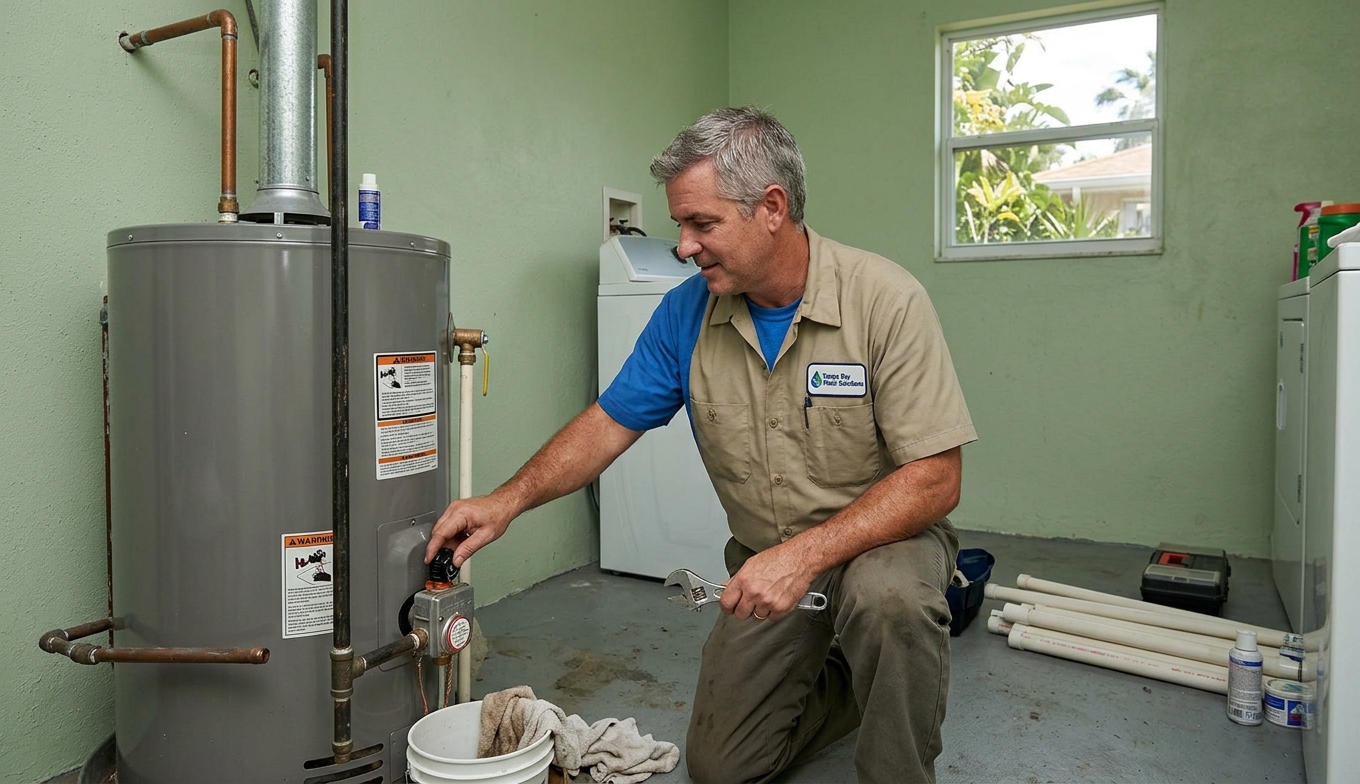
There are few things more frustrating than stepping into a hot shower only to have the water turn cold halfway through. If your hot water isn't lasting as long as it used to, your water heater is trying to tell you something.
Fortunately, running out of hot water doesn't always mean your water heater has reached the end of its life. Sometimes the solution is a relatively simple repair. Other times, it's a sign that your family's hot water needs have outgrown your current system.
At Hometown Hero's Plumbing, owner Jake Fogel has spent more than 20 years diagnosing water heater problems for homeowners throughout the Greater Tampa Bay area. One of the most common service calls we receive starts with the same question:
"Why am I running out of hot water so quickly?"
Let's look at the most likely causes.
Your Water Heater Is Getting Older
Like any appliance, water heaters become less efficient as they age.
As the years pass, internal components wear out, sediment builds up inside the tank, and the system simply can't perform the way it once did.
If your traditional tank water heater is approaching 10 years old and you're noticing shorter showers or inconsistent hot water, age may be playing a role.
Sediment Is Taking Up Space Inside the Tank
This is one of the biggest issues we see throughout Florida.
The Greater Tampa Bay area has moderately hard water, meaning minerals like calcium and magnesium naturally settle inside traditional tank water heaters.
Over time, that sediment forms a thick layer at the bottom of the tank.
Not only does this reduce heating efficiency, but it also takes up valuable space that should be holding hot water.
A 50-gallon tank with years of heavy sediment buildup may actually hold much less usable hot water than you expect.
Annual tank flushing can help reduce sediment buildup and extend the life of your water heater.
A Heating Element Has Failed
If you have an electric water heater, it contains two heating elements.
When one of those elements fails, the water heater often continues working—but only partially.
Homeowners commonly notice:
-
Hot water runs out much faster.
-
Water never gets quite as hot.
-
Recovery time becomes much longer.
The good news is that heating elements can often be replaced without replacing the entire water heater, provided the tank itself is still in good condition.
A Broken Dip Tube
Most homeowners have never heard of a dip tube, but it's one of the most important parts inside a traditional tank water heater.
The dip tube directs incoming cold water to the bottom of the tank, where it can be heated before mixing with the stored hot water.
If the dip tube cracks or breaks, cold water enters near the top of the tank instead.
The result?
Your hot water mixes with cold water almost immediately, causing showers to become lukewarm much faster than they should.
A damaged dip tube is a relatively common repair and one that's easy to overlook without a professional inspection.
Your Thermostat Isn't Working Properly
Sometimes the water heater itself isn't the problem.
A malfunctioning thermostat may prevent the unit from heating water to the proper temperature.
Symptoms often include:
-
Water that isn't consistently hot
-
Fluctuating temperatures
-
Shorter periods of available hot water
Replacing a faulty thermostat is often much less expensive than replacing the entire water heater.
Your Family Has Outgrown the Water Heater
Sometimes nothing is actually wrong.
Your household simply uses more hot water than it did when the water heater was originally installed.
For example:
-
The kids have become teenagers with longer showers.
-
More family members have moved into the home.
-
You've added another bathroom.
-
Laundry and showers happen simultaneously more often.
If your hot water demands have increased significantly over the years, your existing water heater may simply be undersized.
In these situations, upgrading to a larger tank—or switching to a properly sized tankless system—may provide the best long-term solution.
You're Using Too Much Hot Water at Once
Even a perfectly functioning water heater has limits.
Running multiple hot water appliances at the same time can quickly deplete a traditional storage tank.
For example:
-
Two showers
-
Dishwasher
-
Washing machine
...all operating simultaneously can easily exceed the capacity of many residential water heaters.
Spreading out hot water usage may help, or it could indicate it's time to upgrade your system.
Your Water Heater Was Never Properly Sized
Unfortunately, we occasionally find homes where the original water heater wasn't the correct size from the beginning.
Choosing the right water heater depends on factors such as:
-
Household size
-
Number of bathrooms
-
Simultaneous hot water usage
-
Peak morning demand
-
Future family needs
A properly sized water heater should comfortably meet your household's daily hot water demands without wasting unnecessary energy.
Can This Problem Be Repaired?
In many cases, yes.
Some of the most common repairable water heater issues include:
-
Broken heating elements
-
Faulty thermostats
-
Damaged dip tubes
-
Minor electrical components
-
Sediment removal through professional flushing
However, if the tank itself is leaking or heavily corroded, replacement is usually the better investment.
That's why a professional inspection is so important before assuming you need a new water heater.
When Should You Replace Instead of Repairing?
Jake often tells homeowners that replacing a water heater isn't about age alone—it's about value.
If your unit is more than 10 years old, requires frequent repairs, and still struggles to provide enough hot water, replacing it may save money over the long run.
On the other hand, a newer water heater with a failed heating element or thermostat may have many years of reliable service left after a relatively inexpensive repair.
Our goal is always to recommend what's best for the homeowner—not simply the most expensive option.
Don't Ignore the Warning Signs
If your hot water is disappearing faster than it used to, don't assume it's something you'll just have to live with.
Small issues often become larger repairs when ignored, and many water heater problems can be corrected before they lead to a complete loss of hot water.
Whether your system needs a simple repair, routine maintenance, or it's time for a replacement, addressing the problem early can help you avoid unexpected breakdowns and restore dependable hot water throughout your home.
Hometown Hero's Plumbing Is Here to Help
With more than 20 years of plumbing experience, Jake has helped thousands of homeowners throughout the Greater Tampa Bay area diagnose water heater problems and choose the right solution for their homes.
Whether your water heater needs a new heating element, a professional flush, a thermostat replacement, or it's time to install a new traditional or tankless system, Hometown Hero's Plumbing is here to provide honest recommendations and quality workmanship.
If you're tired of running out of hot water halfway through your shower, contact Hometown Hero's Plumbing today. We'll inspect your system, explain exactly what's happening, and help you get back to enjoying reliable hot water every day.
About The Author
Jake Foley, Hometown Hero's Plumbing owner, has 20+ years providing reliable, quality plumbing services to residents and business owners throughout the Tampa, FL, area.