Why Sewer Lines Fail and What Greater Tampa Bay Homeowners Can Do to Prevent Costly Repairs
Your home's sewer line is one of the most important parts of your plumbing system, but it's also one of the most overlooked.
Hidden beneath your yard, the main sewer line quietly carries wastewater away from every toilet, sink, shower, washing machine, and floor drain in your home. Because it's underground, most homeowners never think about it—until something goes wrong.
When a sewer line begins to fail, the warning signs often start small. A slow drain here. A recurring clog there. Before long, you're dealing with multiple backed-up fixtures, unpleasant odors, or even sewage backing into your home.
At Hometown Hero's Plumbing, owner Jake Foley has spent more than 20 years diagnosing sewer line problems throughout the Greater Tampa Bay area. While every plumbing system is different, most sewer failures can be traced back to a handful of common causes.
Understanding what causes sewer lines to fail can help you recognize problems early and potentially avoid much larger sewer line repairs down the road.
Tree Roots Are the Number One Culprit
Trees Are Looking for Water—Your Sewer Line Provides It
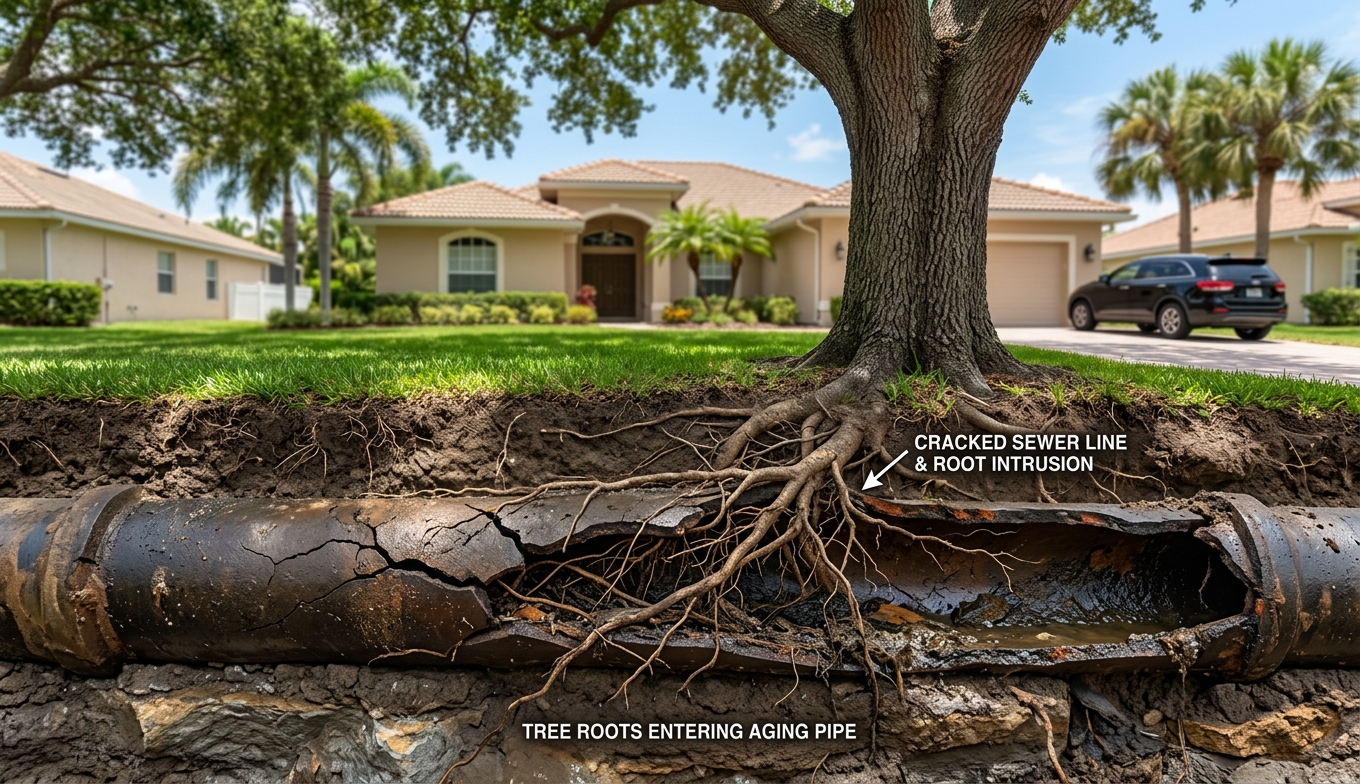
Tree roots are one of the leading causes of sewer line damage across Florida.
Even the smallest crack or loose pipe joint can release moisture into the surrounding soil. Tree roots naturally seek out that moisture and begin growing toward it.
Once they reach the pipe, roots can:
-
Enter through tiny cracks
-
Expand inside the sewer line
-
Catch toilet paper and debris
-
Create recurring blockages
-
Eventually crack or separate the pipe
Many homeowners are surprised to learn that the tree causing the problem isn't always close to the sewer line. Mature root systems often extend much farther than expected.
Routine sewer camera inspections can identify root intrusion before it leads to a complete blockage.
Aging Pipes Eventually Wear Out
Every Plumbing System Has a Lifespan
No plumbing material lasts forever.
Many older homes throughout the Greater Tampa Bay area still contain sewer pipes that were installed decades ago using materials no longer considered ideal by today's standards.
Depending on the age of your home, your sewer line may be constructed from:
-
Clay pipe
-
Cast iron
-
Orangeburg pipe
-
Older PVC
-
Concrete pipe
Over time, these materials can crack, corrode, deteriorate, or shift.
One of the first questions Jake asks during a sewer inspection is the age of the home because it often provides valuable clues about the type of piping underground.
Ground Movement and Soil Shifting
Florida Soil Doesn't Always Stay in Place
Although Florida doesn't experience earthquakes like some parts of the country, the ground beneath your home is constantly changing.
Heavy rains, drought conditions, nearby construction, and natural settling can all cause soil movement.
When the soil shifts, underground sewer pipes may:
-
Separate at pipe joints
-
Develop cracks
-
Sag or settle
-
Lose proper slope
-
Collapse under pressure
Even small changes underground can affect how wastewater flows through your plumbing system.
Orangeburg Pipe Deterioration
A Common Problem in Older Neighborhoods
Many homeowners have never heard of Orangeburg pipe until they need sewer repairs.
Orangeburg was a sewer pipe material made primarily from layers of wood pulp and asphalt. It was widely installed between the 1940s and early 1970s because it was affordable and lightweight.
Unfortunately, it wasn't designed to last forever.
As it ages, Orangeburg pipe can:
-
Flatten
-
Deform
-
Absorb moisture
-
Collapse internally
-
Restrict wastewater flow
If your home was built during this era and still has its original sewer line, a professional sewer camera inspection can determine whether replacement should be considered before a major failure occurs.
Grease and Household Waste
Not Everything Belongs Down the Drain
Many sewer problems begin inside the home.
Grease, cooking oils, and food scraps may seem harmless when they're warm, but they quickly cool and harden inside sewer pipes.
Over time, grease combines with:
-
Soap residue
-
Hair
-
Toilet paper
-
Mineral deposits
-
Other debris
Eventually, these materials create stubborn blockages that slow wastewater flow and increase the risk of backups.
Proper disposal habits are one of the simplest ways homeowners can protect their sewer systems.
Flushing the Wrong Things
"Flushable" Doesn't Always Mean Sewer Friendly
Modern plumbing systems are designed for two things:
-
Human waste
-
Toilet paper
Unfortunately, many products marketed as "flushable" don't break down the same way toilet paper does.
Items that should never be flushed include:
-
Baby wipes
-
Cleaning wipes
-
Paper towels
-
Feminine hygiene products
-
Cotton swabs
-
Dental floss
-
Grease
-
Cat litter
Even products labeled "flushable" can contribute to sewer blockages over time.
Corrosion Inside Older Pipes
Time Takes Its Toll
Metal sewer pipes, particularly cast iron, naturally corrode over time.
As corrosion develops, the inside diameter of the pipe gradually becomes smaller.
This creates rough surfaces that catch debris more easily and reduce the sewer line's ability to carry wastewater efficiently.
Eventually, corrosion can weaken the pipe enough to allow cracks or collapse.
Poor Original Installation
Some Problems Start on Day One
Not every sewer problem is caused by age.
Occasionally, sewer lines fail because they weren't installed correctly in the first place.
Installation issues may include:
-
Improper slope
-
Loose joints
-
Poor bedding material
-
Inadequate support
-
Inferior workmanship
These issues may not become noticeable until years later, when recurring drainage problems begin appearing.
Heavy Rainfall and Saturated Soil
Florida Weather Can Affect Underground Plumbing
The Greater Tampa Bay area experiences significant rainfall throughout much of the year.
Extended periods of heavy rain can:
-
Saturate surrounding soil
-
Increase pressure on underground pipes
-
Expose existing weaknesses
-
Accelerate ground movement
While rain itself doesn't typically damage sewer pipes, it can worsen existing issues that were already developing underground.
Warning Signs Your Sewer Line May Be Failing
Don't Ignore These Red Flags
Many sewer failures provide early warning signs before a complete collapse occurs.
Watch for:
-
Multiple slow drains
-
Frequent drain backups
-
Toilets gurgling
-
Water backing up into showers
-
Sewer odors inside or outside
-
Wet or unusually green patches of grass
-
Foundation settling near sewer lines
The earlier these problems are investigated, the more repair options are usually available.
How Sewer Camera Inspections Help
Seeing the Problem Before Digging
Guessing is never the best way to diagnose a sewer problem.
That's why Hometown Hero's Plumbing uses high-definition sewer camera inspections to examine the inside of sewer lines before recommending repairs.
A camera inspection allows us to identify:
-
Root intrusion
-
Cracks
-
Pipe separation
-
Corrosion
-
Blockages
-
Bellies
-
Collapsed sections
-
Pipe material
Instead of estimating what's happening underground, we can often show homeowners the exact problem in real time.
Jake's Advice After More Than 20 Years
One thing Jake has learned from decades in the plumbing industry is that sewer lines rarely fail without warning.
The problem is that homeowners often mistake those warning signs for simple drain clogs.
By the time multiple fixtures begin backing up, the issue has often been developing for months—or even years.
That's why recurring plumbing problems should never be ignored.
Finding a sewer issue early often means simpler repairs, lower costs, and less disruption to your property.
Protect Your Sewer System Before Problems Grow
Your sewer line is designed to serve your home for decades, but like every part of your plumbing system, it benefits from proper maintenance and early attention when warning signs appear.
Routine inspections, good plumbing habits, and addressing small problems before they become major failures can help extend the life of your sewer system and protect your property.
Hometown Hero's Plumbing Is Here to Help
Whether you're dealing with recurring drain clogs, suspect tree root intrusion, or simply want peace of mind about your underground plumbing, Hometown Hero's Plumbing is here to help.
With more than 20 years of plumbing experience, Jake and our team use advanced sewer camera technology and modern diagnostic equipment to accurately identify sewer line problems and recommend the repair that's right for your home—not simply the most expensive option.
We're proud to help homeowners throughout the Greater Tampa Bay area protect their plumbing systems with honest advice, dependable workmanship, and hometown service you can trust. If you're concerned about your sewer line, contact Hometown Hero's Plumbing today to schedule a professional sewer inspection.
About The Author
Jake Foley, Hometown Hero's Plumbing owner, has 20+ years providing reliable, quality plumbing services to residents and business owners throughout the Tampa, FL, area.