
A Simple DIY Maintenance Task Every Greater Tampa Bay Homeowner Should Know
Your water heater is one of the hardest-working appliances in your home, quietly providing hot water for showers, dishes, laundry, and everyday life. Unfortunately, it's also one of the most overlooked when it comes to routine maintenance.
Throughout the Greater Tampa Bay area, naturally occurring minerals in our water can settle inside traditional tank water heaters over time. This sediment buildup forces your water heater to work harder, reduces efficiency, increases energy costs, and can even shorten the life of the tank.
The good news? Flushing your water heater once a year is one of the easiest ways to help protect your investment.
At Hometown Hero's Plumbing, owner Jake Fogel has spent more than 20 years servicing water heaters throughout the Tampa Bay region. One of the most common issues he sees is excessive sediment buildup that could have been minimized with regular maintenance. Here's a simple guide to help you safely flush your water heater.
Why Flushing Your Water Heater Is Important
As water is heated, minerals like calcium and magnesium settle at the bottom of the tank. Over months and years, this layer becomes thicker and harder.
That sediment can cause:
-
Popping or rumbling noises
-
Reduced hot water capacity
-
Higher energy bills
-
Longer heating times
-
Increased wear on the tank
-
Shorter water heater lifespan
Annual flushing removes much of this buildup before it becomes a costly problem.
Before You Begin
You'll need:
-
A standard garden hose
-
A bucket (optional)
-
A flathead screwdriver (for some drain valves)
-
Work gloves
-
Access to a floor drain, driveway, or safe drainage location
Important: If your water heater is older and has never been flushed, or if you're unsure about any part of this process, it's often best to have a licensed plumber perform the maintenance. In some cases, disturbing years of sediment can expose existing weaknesses in an aging tank.
Step 1: Turn Off the Power or Gas
For electric water heaters, switch off the breaker supplying power to the unit.
For gas water heaters, turn the thermostat to the "Pilot" setting or follow the manufacturer's instructions.
Never drain an electric water heater while the heating elements are energized.
Step 2: Turn Off the Cold Water Supply
Locate the cold-water shutoff valve above the water heater and close it completely.
This prevents additional water from entering the tank during the flushing process.
Step 3: Allow the Water to Cool
Hot water inside the tank can cause serious burns.
Allow the water heater to cool for several hours before draining, or carefully run hot water from a nearby faucet until the temperature begins to drop.
Always use caution when working around hot water.
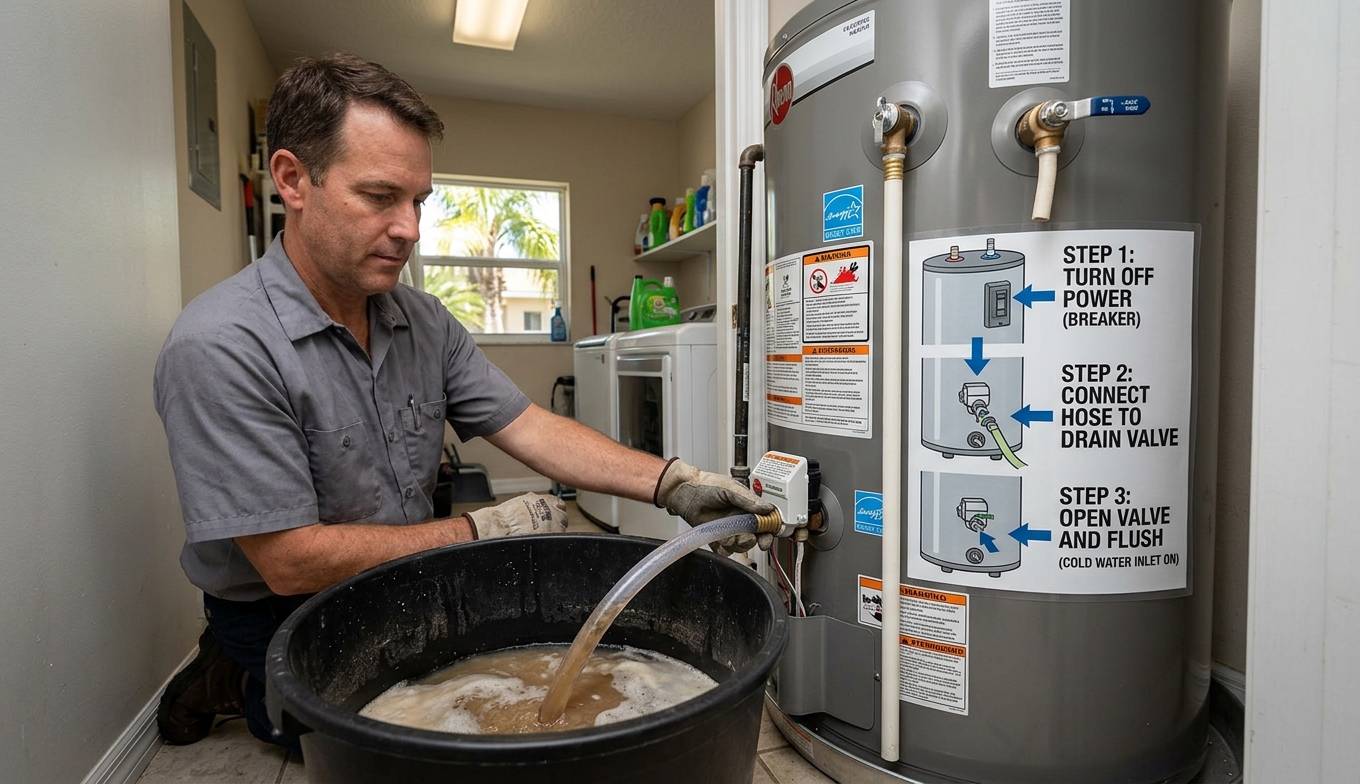
Step 4: Connect a Garden Hose
Attach a garden hose securely to the drain valve near the bottom of the tank.
Route the other end of the hose to:
-
A floor drain
-
Your driveway
-
A safe outdoor drainage area
Make sure the hose remains secure before opening the drain valve.
Step 5: Open a Hot Water Faucet
Choose a nearby hot water faucet inside your home and open it.
This allows air into the plumbing system and helps the water drain more smoothly.
Step 6: Drain the Tank
Slowly open the drain valve.
Water will begin flowing through the hose.
As the tank empties, you may notice cloudy water or visible sediment. That's exactly what you're trying to remove.
Allow the tank to drain completely.
Step 7: Flush the Remaining Sediment
With the drain valve still open, briefly reopen the cold-water supply.
The incoming water will stir up and flush out any remaining sediment.
Continue flushing until the water coming through the hose appears clean and clear.
Depending on the amount of buildup, you may repeat this process several times.
Step 8: Close Everything Back Up
Once the water runs clear:
-
Close the drain valve.
-
Disconnect the garden hose.
-
Turn the cold-water supply back on.
-
Allow the tank to refill completely.
Keep the hot water faucet open until water flows steadily without sputtering. This removes trapped air from the system.
Step 9: Restore Power or Gas
After the tank has completely refilled:
-
Turn the circuit breaker back on for electric units.
-
Relight or reset your gas water heater according to the manufacturer's instructions.
Never restore power to an empty electric water heater, as doing so can damage the heating elements.
Check for Leaks
Take a few minutes to inspect:
-
The drain valve
-
Water supply connections
-
The pressure relief valve
-
Around the base of the tank
Even a small leak should be addressed promptly before it becomes a larger plumbing issue.
How Often Should You Flush Your Water Heater?
For most homes in the Greater Tampa Bay area, we recommend flushing a traditional tank water heater once every year.
Homes with especially hard water or higher hot water usage may benefit from more frequent maintenance.
Annual flushing helps:
-
Improve efficiency
-
Reduce sediment buildup
-
Extend equipment life
-
Lower energy costs
-
Improve hot water performance
When It's Time to Call a Professional
While flushing a water heater is a manageable DIY project for many homeowners, there are times when professional service is the safer option.
Contact Hometown Hero's Plumbing if:
-
Your drain valve won't open.
-
The valve begins leaking after flushing.
-
Rust-colored water continues after flushing.
-
Your water heater is making loud rumbling noises.
-
The tank is leaking.
-
Your water heater hasn't been serviced in many years.
-
You're uncomfortable performing the maintenance yourself.
Our experienced plumbers can safely flush your water heater, inspect its overall condition, and identify small issues before they become expensive repairs.
Protect Your Investment with Routine Maintenance
A water heater is a significant investment, and a little preventative maintenance can go a long way.
With more than 20 years of plumbing experience, Jake has seen firsthand how regular maintenance can help homeowners get more years of dependable service from their water heaters. Annual flushing, combined with periodic professional inspections, can improve efficiency, reduce wear, and help you avoid unexpected breakdowns.
If it's been more than a year since your last water heater maintenance—or you're noticing strange noises, rusty water, or inconsistent hot water—Hometown Hero's Plumbing is here to help.
We're proud to provide honest advice, professional water heater maintenance, repairs, and replacement services for homeowners throughout the Greater Tampa Bay area.
About The Author
Jake Foley, Hometown Hero's Plumbing owner, has 20+ years providing reliable, quality plumbing services to residents and business owners throughout the Tampa, FL, area.